The Missing Element in Your Bhakti
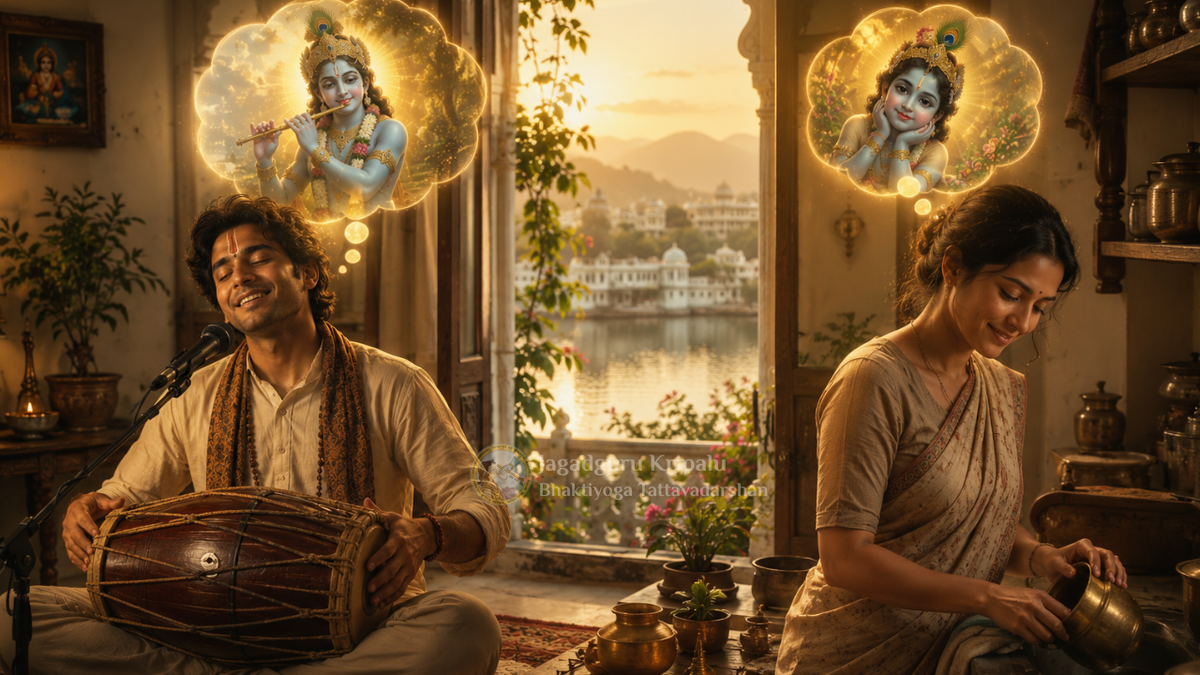
There are many forms of devotion. The Bhagavatam, the foremost scripture on bhakti, describes thirty different types of devotion. However, according to Shri Maharaj Ji, the forms of devotion are actually infinite.
tasmāt kenāpyupāyena mana: kṛṣṇe niveśayet (Bhāgavatam), yena-kena prakāreṇa mana: kṛṣṇe niveśayet (Bhakti Rasamrita Sindhu)
By any means whatsoever, if the mind - not merely the senses - becomes attached to Shri Krishna, that is true devotion. The essential goal is simple: the mind must somehow become attached to God, whether through love, fear, anger, selfish motives, or selfless motives.
Throughout countless lifetimes, we have performed devotional acts with the senses innumerable times without genuine remembrance of God. We have chanted "Ram Ram," "Shyam Shyam," and "Radhey Radhey" infinitely many times. If someone has a relative named Radha, they may repeat her name many times every day, even while having no faith in God at all.
In one sense, everyone is constantly uttering the names of God. The Vedas declare:
kaṃ brahma, khaṃ brahma, akāro vāsudevasya, ukāraḥ śambhuḥ
Letters such as "ka," "kha," "ga," "a," and "u" are all names of God.
Therefore, whatever we speak may, in one sense, be considered the name of God. Yet we derive no spiritual benefit from it. God resides within us, but that alone has not benefited us. He is all-pervading, yet we remain unchanged. We have even seen Him innumerable times during His divine descensions, and still gained no benefit.
Why? Because benefit comes only when the 'mind' becomes attached to Him.
Bhakti-hīna means devoid of devotion - that is, devoid of the mind's loving attachment to God. Any religious act or spiritual practice performed without such attachment is ultimately futile.
sa kartā sarva-dharmāṇāṁ yo bhaktas tava keśava।
sa kartā sarva-pāpānāṁ yo na bhaktas tavācyuta॥
One who gives the highest priority to devotion and abandons all other religious duties prescribed in the scriptures (karma-dharma) is worthy of reverence. A person who practices devotion to God with the mind is considered to have fulfilled all religious duties. On the other hand, one who neglects devotion and merely performs external religious duties cannot attain liberation and is not worthy of reverence. Such a person remains bound to the cycle of birth and death, wandering through the 8.4 million species of life.
śravaṇaṃ kīrtanaṃ viṣṇoḥ arcanam pādasevanam।
smaraṇaṃ vandanaṃ dāsyaṃ sakhyam ātma-nivedanam॥ -
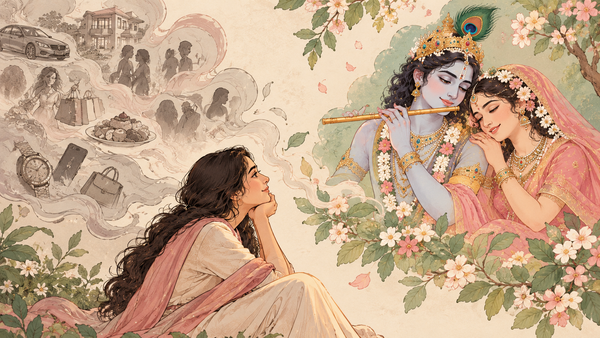
Among the nine forms of devotion, smaraṇ bhakti - lovingly remembering and meditating on the divine form of God - is foremost. It is beneficial to engage the senses in devotion as well, but Roopdhyan - lovingly meditating on the divine form of God - in other words, smaran bhakti, is the life force of devotion -
manera smaraṇa prāṇa.
Just as the body has no value without the life force (prana), devotional activities performed only through the senses while the mind remains absorbed in the world have no value. Remember this fact every moment - always give primary importance to smaran - loving remembrance of God.
Even if you do not utter a single word, your devotion can continue. There may be situations where openly chanting "Radhey Radhey" is not possible. For example, when surrounded by atheists or hostile people, verbal chanting may invite ridicule or opposition. But no one can stop you from remembering God within your heart. Through such remembrance, your spiritual practice continues uninterrupted, and your spiritual wealth quietly increases.
smṛtavyaḥ satataṃ viṣṇur vismartavyo na jātucit। sarve vidhi-niṣedhāḥ syur etayor eva kiṅkarāḥ॥
Always remember God and never forget Him. All Vedic injunctions and prohibitions exist solely to support these two principles.
Recommended books by Jagadguru Shri Kripalu Ji Maharaj related to this topic: