Is Devotion Enough to Attain God?
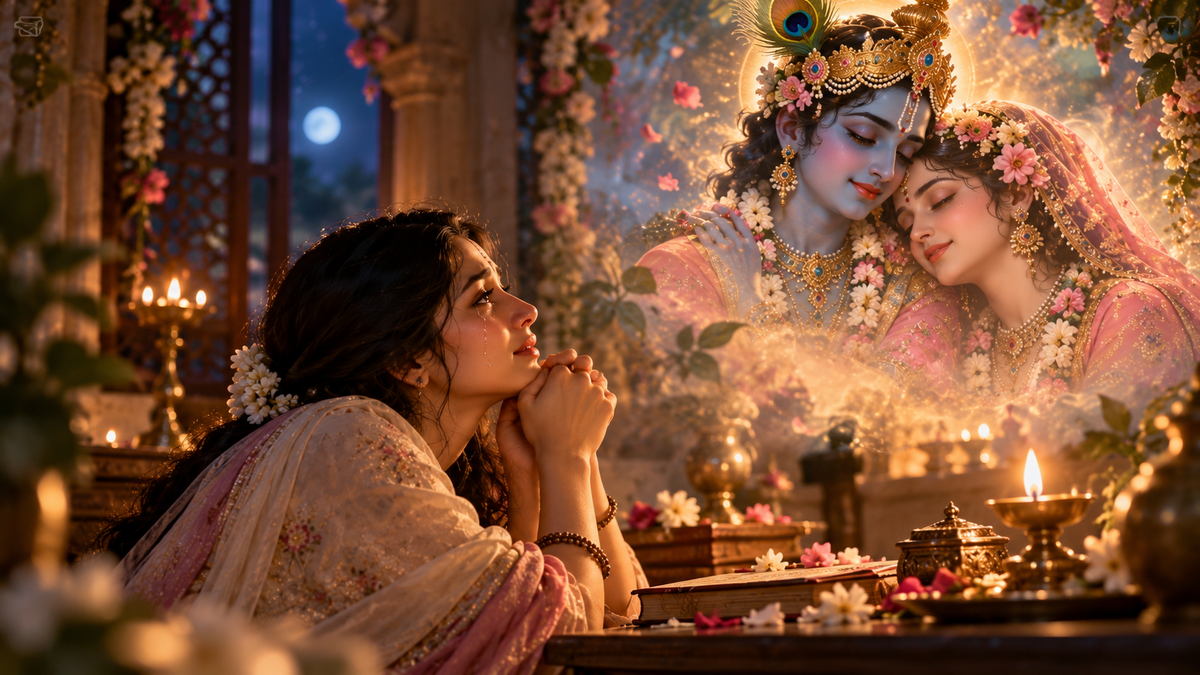
Sumiran kar le mana chhin chhin Radha Ramana
Braj Ras Madhuri, part 3, page no. 50, sankirtan no. 15
In the Bhagavatam (Shlokas 11-3-23 to 11-3-33), thirty forms of devotion are described. However, except for one, all the others are secondary. They hold no special significance in leading one to the ultimate goal.
Every living being has only one essential task: to purify the mind. Those who have not accomplished this over countless births continue to wander through the cycle of 8.4 million species.
Even the great saints did not attain the vision of God merely through devotional practices. God cannot be perceived through any spiritual practice performed with the material senses, mind, and intellect. Whatever practice you perform, you perform it through these instruments - and the senses, mind, and intellect are all made of Maya. The divine God cannot be perceived through instruments that are themselves material.
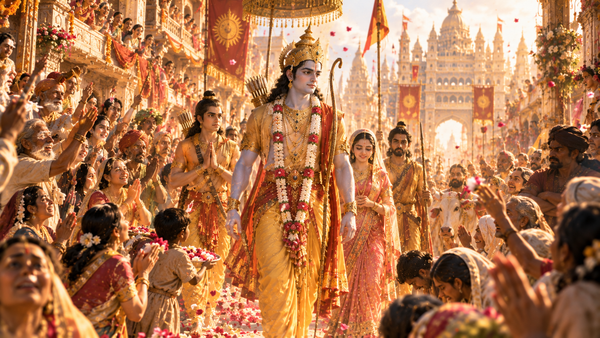
When Lord Ram descended upon Earth, everyone saw Him, but different people perceived Him differently.
When the atheists saw Him:
Bidushan Prabhu birāṭamaya dīsā,
Bahu mukh kar pag lochan sīsā.
Some said that He had four heads, some said twelve, while others said that He had no head at all.
When you look at an ordinary person in the world, depending on how you perceive them, that person will either appear attractive, unattractive, or simply ordinary. But do that person's head, feet, eyes, or ears actually change depending on how we perceive them? Of course not.
Then why did different people perceive Lord Ram's form in such different ways?
The reason is -
Jākī rahi bhāvanā jaisī, prabhu mūrat dekhi tin taisī.
One perceives the form of God according to one's devotional sentiment and attitude.
And:
Hari bhaktan dekhe doū bhāī, iṣṭadeva iva sab sukhadāī -
Only those devotees who received God's divine darshan saw His divine form. No one else did.
Therefore, God cannot be perceived through the material senses and mind. Nor can He be attained through practices performed solely with these instruments.
Then what is the purpose of devotional practice?
Its purpose is to purify the mind.
Purifying the mind means removing worldly attachments - attachment to mother, father, brother, son, daughter, wealth, status, pride, and everything else that binds the mind to the world.
Remove these attachments and make the mind completely clean and empty.
Only then is there room in your heart prepared to receive God.
But even then, God will not enter a material room. He can enter only a divine room. To receive God, you need divine ears, a divine nose, a divine tongue, divine skin, a divine mind, and a divine intellect. You need divine instruments through which you can perceive
God. You can receive the divine instruments only through God's grace. But even if God wishes to bestow them by His grace, He cannot, because if you have not prepared your vessel - the pure mind. He cannot reside in an impure mind.
Therefore, God says -
"Purify your mind. Practice imagining meditation upon Me - form My image within your mind"
Why is it called "imagined" meditation?
Because God's actual form is divine, and you cannot create or perceive that divine form with a material mind. Whatever form you imagine, you will still perceive it as a material form.
Even if saints tell you, "This is God," you will still say, "How can He be God? He eats, drinks, sleeps, wakes, laughs, and cries just as we do."
Only through divine vision can God's divine form be perceived. And that divine vision can be received only through grace.
A Guru who has attained God can bestow this divine vessel, but even that grace can be properly received only when the mind has first been purified.
Various forms of devotion are prescribed to purify the mind. In particular, Navadha Bhakti, the ninefold devotion described by Prahlad, is well known:
śravaṇam, kīrtanam, viṣṇor-arcanam, pāda-sevanam, smaraṇam, vandanam, dāsyam, sakhyam, ātma-nivedanam.
Among these nine forms of devotion, eight are primarily performed through the senses, while only one - smaraṇam, remembrance - is performed by the mind.
Beholding the deity of God, listening to the Bhagavatam, performing ritualistic worship - these are all devotional activities performed through the senses. They are beneficial, but we cannot attain God through these activities alone. Doing something is certainly better than doing nothing. These practices help us begin the journey. But they do not, by themselves, take us to the ultimate goal.
You can cleanse the senses with water and soap. But the mind can be purified only through remembrance of God.
You may perform ritualistic worship with your senses even while your mind is somewhere else. But unless remembrance of God arises in the mind, the mind itself will not become purified.
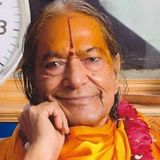
Therefore, Shri Maharaj Ji says,
"O mind! Remember Radha-Raman."
Through remembrance, the dirt accumulated over countless births is cleansed, sins are destroyed, and the mind gradually becomes pure.
God loves a pure mind -
Nirmal mana jan so mohi pāvā
As long as attachments to mother, father, wife, husband, children, wealth, and other worldly objects remain firmly established in the mind, God will not enter it. He will come when the mind becomes filled with nothing but God and His devotees. A pure mind remains balanced amid profit and loss, life and death, praise and criticism, fame and defamation. This equanimity is a sign that the mind is becoming purified.
Therefore, the true essence of devotion is remembrance of God with the mind.
It is not wrong to engage the senses along with remembrance, but devotion done merely through the senses, without remembrance, even for millions of kalpas, is useless and is called hypocrisy. Karmayog means that whatever action you perform, your mind should remain absorbed in God.
The world can be fooled into thinking, "He rises at four in the morning, he recites and chants, he is a great devotee," but -
Milahiṁ na Raghupati binu anurāgā, kiyeṁ joga tapa gyāna birāgā.
When God cannot be attained through great feats like yoga and gyān, what will you attain through mere recitation?
Devotional practices done through the senses are like the first lessons a teacher gives a young child. A teacher initially holds the child's hand and teaches the child how to write.
Similarly, saints tell us to chant God's name, worship the deity, and recite the Ramayana so that we may at least begin walking on the path of devotion. But these practices are only the beginning. True devotion requires purifying the mind.
How will the mind become purified?
It is purified through tears - that is, through love for God.
Hiya fāṭahuṁ phūṭahuṁ nayan, jara'u so sutan kehi kāma. Drava'i śrava'i nahiṁ pulaka'i nahiṁ, Tulsi sumirat Rām.
If the heart does not melt and tears do not flow while remembering God, then it is not true remembrance. Therefore, you must purify your mind. That is why the kirtan says:
"O mind! Remember Radha-Raman at every moment."
Recommended books by Jagadguru Shri Kripalu Ji Maharaj related to this topic: