(Verse Explanation - brajarasa cuvata roma prati pyāro, paramahaṃsa raha takata bicāro - from - Mero Pyaro Pyaro Murali Waro - Braj Ras Madhuri, part 3, page no. 72, sankirtan no. 25)
The Ashramopanishad explains four classes of gyanis, the worshippers of the attributeless, formless Brahm: 1) Kutichak, 2) Bahudak, 3) Hans, and 4) Paramhans. Among these, the Paramhans class is at the top.
The Narada Parivrajakopanishad mentions two additional classes beyond these: 5) Turiyateet and 6) Avadhut. However, there is not much difference between Paramhans, Turiyateet, and Avadhut. All three are essentially the same.
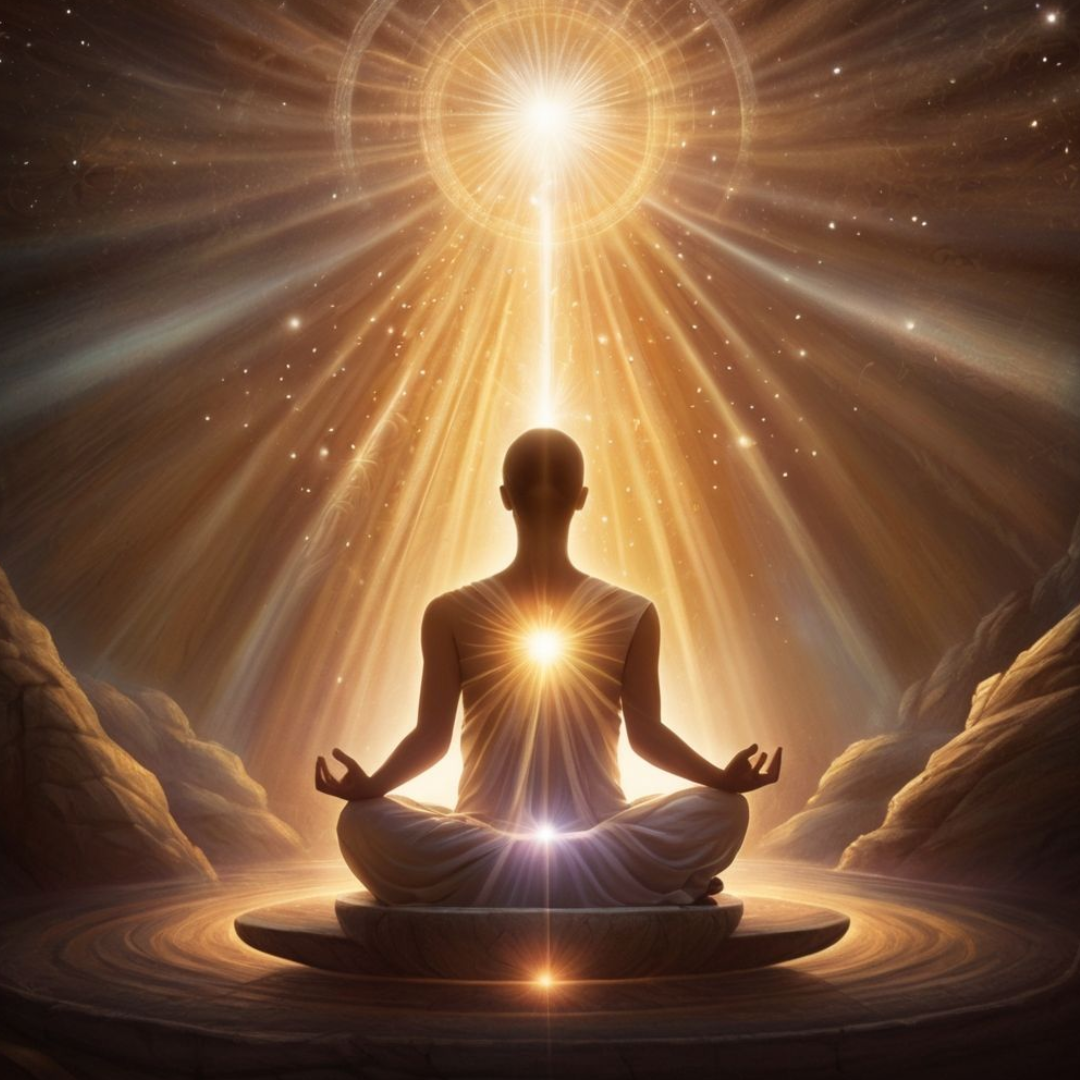
So, who is called a Paramhans? He sees, hears, and experiences only his own Self everywhere. He perceives nothing else. Even when he looks at you, he sees only his own Self. He perceives no distinction between the conscious and the inert - like a person who is fully intoxicated or like one in a comatose state who experiences neither inside nor outside. He always remains equable. These are the states of a gyani. A gyani attains the Paramhans state only occasionally.
Below this is the state of Hans - here, one perceives everything (man, woman, buildings, etc.), yet remains completely unattached. Nothing appears good or bad.
The devotee also experiences such states. At times, he sees Shyamsundar everywhere, and when he perceives the world, he sees Shyamsundar within it. He possesses the power of Yogamaya, which enables him to perform divine actions while appearing to engage in worldly activities.
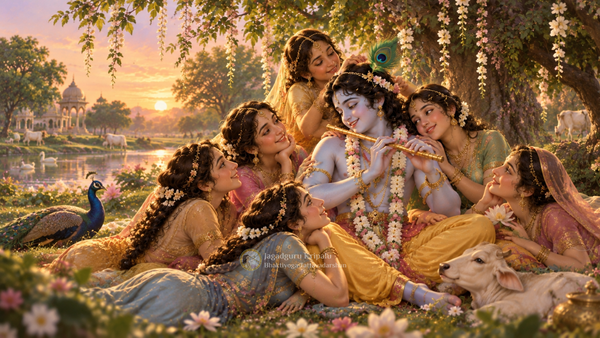
The Gopis performed the rās dance and even embraced Shri Krishna, yet they did not become unconscious- jaguḥ prabaṃdhaṃ svaratālabaṃdhaṃ - they sang perfect musical notes and danced in synchronised rhythm through the power of the same Yogamaya.
Ram, Lakshman, Bharat, Shatrughna, and Hanuman (the quintet) are seated in the royal court. Bharat, Lakshman, and the others continuously gaze at Ram and fan Him, yet they do not lose consciousness. The power of Yogamaya enables them to endure infinite bliss. Those without this power, however, lose balance even with a trace of happiness, like a poor man who wins a lottery and becomes overwhelmed with a little material joy. The happiness of heaven is infinitely greater than that, and the bliss of God is infinitely greater still. Through Yogamaya, they appear to perform worldly duties while, in fact, relishing infinite divine bliss at every moment. Some rule kingdoms, Arjun fights battles and kills enemies, and Prahlad and Dhruv live as householders - yet remain detached, like water on a lotus leaf.
A Paramhans cannot attain divine love because he believes God to be absolutely formless. God bestows bliss in accordance with one's belief. Therefore, when a gyani Paramhans hears Shri Krishna's flute, he certainly feels attracted, yet he is not qualified to relish that divine nectar. God does not grant him that bliss, so he keeps gazing - like a poor man who looks upon a king's luxuries and laments, "Alas! This is not meant for me." Such is the supremely exalted position of our Shyamsundar.
Recommended books by Jagadguru Shri Kripalu Ji Maharaj related to this topic:
Prem Ras Siddhanta- English
(Verse Explanation - brajarasa cuvata roma prati pyāro, paramahaṃsa raha takata bicāro - from - Mero Pyaro Pyaro Murali Waro - Braj Ras Madhuri, part 3, page no. 72, sankirtan no. 25)
The Ashramopanishad explains four classes of gyanis, the worshippers of the attributeless, formless Brahm: 1) Kutichak, 2) Bahudak, 3) Hans, and 4) Paramhans. Among these, the Paramhans class is at the top.
The Narada Parivrajakopanishad mentions two additional classes beyond these: 5) Turiyateet and 6) Avadhut. However, there is not much difference between Paramhans, Turiyateet, and Avadhut. All three are essentially the same.
So, who is called a Paramhans? He sees, hears, and experiences only his own Self everywhere. He perceives nothing else. Even when he looks at you, he sees only his own Self. He perceives no distinction between the conscious and the inert - like a person who is fully intoxicated or like one in a comatose state who experiences neither inside nor outside. He always remains equable. These are the states of a gyani. A gyani attains the Paramhans state only occasionally.
Below this is the state of Hans - here, one perceives everything (man, woman, buildings, etc.), yet remains completely unattached. Nothing appears good or bad.
The devotee also experiences such states. At times, he sees Shyamsundar everywhere, and when he perceives the world, he sees Shyamsundar within it. He possesses the power of Yogamaya, which enables him to perform divine actions while appearing to engage in worldly activities.
The Gopis performed the rās dance and even embraced Shri Krishna, yet they did not become unconscious- jaguḥ prabaṃdhaṃ svaratālabaṃdhaṃ - they sang perfect musical notes and danced in synchronised rhythm through the power of the same Yogamaya.
Ram, Lakshman, Bharat, Shatrughna, and Hanuman (the quintet) are seated in the royal court. Bharat, Lakshman, and the others continuously gaze at Ram and fan Him, yet they do not lose consciousness. The power of Yogamaya enables them to endure infinite bliss. Those without this power, however, lose balance even with a trace of happiness, like a poor man who wins a lottery and becomes overwhelmed with a little material joy. The happiness of heaven is infinitely greater than that, and the bliss of God is infinitely greater still. Through Yogamaya, they appear to perform worldly duties while, in fact, relishing infinite divine bliss at every moment. Some rule kingdoms, Arjun fights battles and kills enemies, and Prahlad and Dhruv live as householders - yet remain detached, like water on a lotus leaf.
A Paramhans cannot attain divine love because he believes God to be absolutely formless. God bestows bliss in accordance with one's belief. Therefore, when a gyani Paramhans hears Shri Krishna's flute, he certainly feels attracted, yet he is not qualified to relish that divine nectar. God does not grant him that bliss, so he keeps gazing - like a poor man who looks upon a king's luxuries and laments, "Alas! This is not meant for me." Such is the supremely exalted position of our Shyamsundar.
Recommended books by Jagadguru Shri Kripalu Ji Maharaj related to this topic:
Prem Ras Siddhanta- English
Read Next
The Sacred Confluence of Love and Loss: Pushp Visarjan at Prayagraj
6 July 2025 – Prayagraj: Pushp Visarjan On July 2, 2025, Manjhali Didi and Chhoti Didi gathered with devotees to conduct the immersion ceremony for Badi Didi's ashes at Shringverpur. A profound sense of loss permeated the event. It is widely recognised that no single method can completely ease
Beyond Goodbye: Holding Onto Badi Didi in Our Hearts
Pushp Visarjan – 2nd July 2025, Shringverpur It was an extraordinary day filled with deep devotion and heavy hearts. Devotees from every corner of the globe, as well as local participants, gathered at Kripalu Dham for a momentous occasion—the immersion of flowers belonging to our beloved Badi Didi into the
Daily Devotion - Nov 12, 2025 (English)-Power of Divine Name
You have chanted God's names infinitely more times over countless births than the time you have spent singing them now. Yet those innumerable chants bore no fruit - just as multiplying any number by zero still yields zero, no matter how large the number may be. This means
Daily Devotion - Nov 5, 2025 (English)- Arise, Awake, and Attain
God says in the Vedas - Uttiṣṭhata jāgrata prāpya varānnibodhata - Arise, awake, and attain your supreme goal. No life form is more important than the one I have given you. Beyond human birth lies only one further attainment: God realisation. So, do not fall - only rise higher -