Can God's Name Ever Be Restricted by Rules?
Hare Ram sankirtan is found in the Vedas, in the Kalisantaranopanishad - this Vedic mantra was created for the souls of Kaliyug. All other Vedic mantras have specific intonations and strict rules for chanting. However, this mantra has no prescribed method or rules; the Vedas have given us this liberty. You don't need to bathe before chanting it or face east, as with the other mantras. One can chant or sing the Hare Ram mantra anywhere, anytime, in any condition, no matter how unclean one may be.
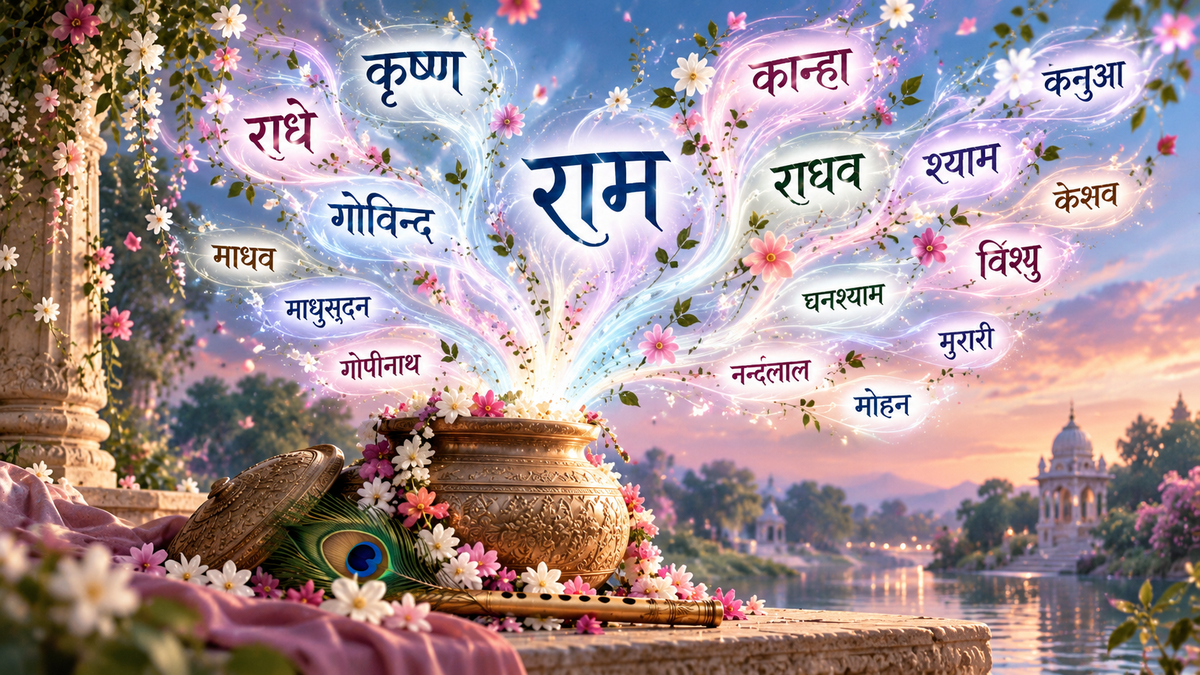
The mantra consists of three words: Hari, Ram, and Krishna.
Many people are confused, thinking, "We are devotees of Ram; it's difficult for us to say 'Hare Krishna '; our mind doesn't get attached to Krishna's name." People in the Gaudiya tradition have even reversed this mantra. They say Hare Krishna first, then Hare Ram.
Thinking that Hari, Ram, and Krishna are different is a misconception. The word Hari means the same as Ram and Krishna; they all mean the same thing.
The meaning of 'Hari' is: "Harati yogināṃ chetāṃsi iti Harih", one whose form attracts the minds of the paramahamsas is Hari. The minds of the paramahamsas are also attracted by Vishnu, Ram (ramante yoginosmin iti rāma:), and Krishna (karṣati yogināṃ cetāṃsi iti kṛṣṇa:). So, the names of Ram and Krishna have the same meaning.
God said, janmakarmabhidhānāni santi me'ṅga sahasraśaḥ - "Even I cannot count my descensions, names, and qualities because they are infinite. And I have given beings the right to call me by any name they wish." - he has given us such liberty!
Mother Yashoda never chanted the Hare Ram mahamantra. She called Krishna "Kanuā." The name Kanuā isn't in any Vedic mantra. So, all are names of God and have the same meaning. Therefore, one shouldn't nurture this illness in the mind (the tendency to find distinctions among God's names).
You can chant and sing the Hare Ram mantra anytime, anywhere.
Recommended books by Jagadguru Shri Kripalu Ji Maharaj related to this topic: