The Cycle We Never Seem to Escape
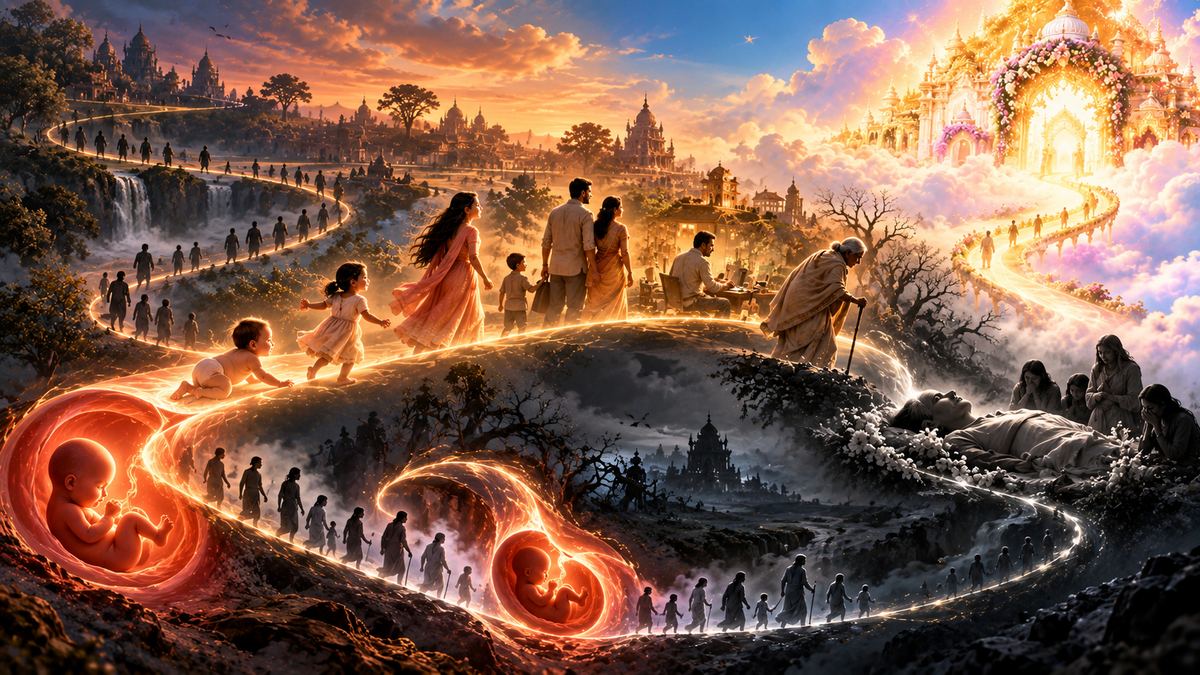
There are four paths for the welfare of all souls - Karma, Yog, Gyan, and Bhakti.
- The result of karma is swarg, the heavenly abode.
- Through Yog, one gets established in the self but remains under the influence of Maya.
- Through Gyan, one attains the knowledge of the self (Atmagyan) but remains under the influence of Maya.
- Only through devotion can the soul transcend Maya.
One can also cross the ocean of Maya by combining Bhakti with Karma, yog, and Gyan.
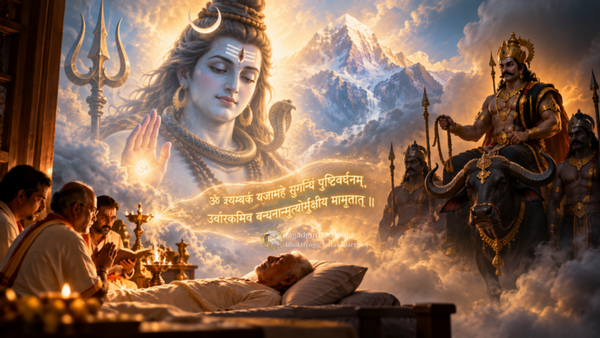
Whoever comes into the world has to leave one day - whether one is bound by Maya, or one is beyond the control of Maya. Some leave their body of their own will (God-realized Saints who incarnate for our welfare), and some are forced to leave their body (souls under Maya, who are born due to the bondage of karma). There is coming and going, i.e., the cycle of birth and death in the world.
However, some go but never return - they are saints. They go to God's divine abode - yadgatvā na nivartante taddhāma paramaṃ mama. They are as rare as a few among billions.
The remaining souls do three things repeatedly -
Punarapi jananaṃ punarapi maraṇaṃ punarapi jananī jaṭhare śayanaṃ।
That is,
- hang upside down in a mother's womb,
- be born,
- die, and then the cycle repeats once again when one enters another mother's womb and hangs upside down. This drama has been going on for eternity.
The one who surrenders completely to God, leaving aside their strength and intellect, is alone freed from this cycle of birth and death. Such people are extremely rare.
But everyone must go one day. There is no devotee who can say, "I choose not to go." Even God leaves one day, when He incarnates at the destined time. God and the saints leave by their own will - that is a different matter, but everyone must go. No one can stay here permanently because this world itself is not permanent. After one day of Brahma, dissolution happens for one night of Brahma (that is, 4.32 billion years). When Brahma wakes up again, the creation happens once more. So no one should be surprised when someone dies.
A material body is made of the five gross elements. It is called 'sharir', which means 'sheeryate' in Sanskrit - 'that which continuously deteriorates.' It goes through six stages:
- It begins one day (asti),
- Takes birth (jaayate),
- It grows (vardhate; when the stage of youth arrives, one walks with pride),
- It starts changing, maturing (viparinamate, 40-50 years of age),
- It starts becoming emaciated (apaksheeyate, 60 years and above, becomes weaker at 70, begins walking with a stick at 80 years of age) and
- Dies one day (vinashyati)
Therefore, one should never hope from God or a saint, asking them for a wish that they may never die. Understand ahead of time that whoever is born will die one day. In other words, they have to leave this material body one day.
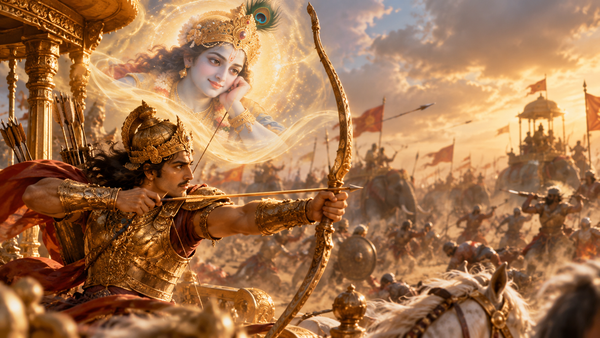
Thus, everyone will have to leave the world one day. Abhimanyu’s maternal uncle was Lord Shri Krishna; his father, Arjun, was a saint; and the one who arranged his marriage was also an incarnation of God, Vedavyasa. Yet Uttara became a widow at the age of sixteen. The Kauravas killed Abhimanyu, who was innocent. Everyone sat mourning. Shri Krishna is the creator of infinite universes - if He wished, He could have brought him back to life. If He wanted, He could have prevented his death altogether. He resides within everyone. He could have inspired Abhimanyu from within to drop his sword and surrender, and the Kauravas could have spared him, treating him as a child. But that didn’t happen - because his time had come.
Jīvitaṁ maraṇaṁ jantor gatiḥ svenaiva karmaṇā -
Based on the karma of the previous birth, God predetermines everyone's lifespan in the mother’s womb itself, saying, “This time around, make sure to attain me. Do not falter this time.” Yet, we become attached to worldly relatives from the moment we are born. When those relationships die one by one, we mourn for them. Therefore, understanding the nature of the world, we should not have attachments to the relatives of the body. We endure our own sufferings anyway, such as physical ailments, the pain of lust, anger, greed, attachment, suffering from weather changes (such as heat, cold, and rain), insults from others, or pain caused by others. This world is full of suffering. Yet the hardened and shameless soul has grown so accustomed to this suffering that it continues to bear it. We face daily insults from those we are attached to, yet we run back to appease them. We cannot let go of the attachment - na virajyate. This is true not only for humans but also for animals and birds. They, too, remain attached to their offspring, crying when they die. Despite enduring so much suffering, we forget the promise we made to God before birth. We promised then, saying, “O Lord, please release me from this hell, and I will only chant your name.” However, the pain of birth made us forget our vow, and the worldly parents and others bind us once again.
When our Guru tells us to give up all attachments and move towards God, we agree in principle and say, "Yes, that’s true. But I cannot let go. I know these relationships will leave me someday, and I will never see them again, no matter how much I cry or scream.” After death, we are born again, form new relationships, and repeat the mistake of calling them "mine." This cycle of attachment and suffering persists in every birth. And yet, we claim to understand everything.
We hold everyone in our heart - worldly relations, God, and Guru alike.
But God's condition is 'eva' - keep 'only' Me and My family in your heart. These are pure. If a dirty cloth is only slightly cleaned but repeatedly dipped back into dirt, it can never become truly clean. The impurity of the mind accumulated over infinite lifetimes can be removed only by continuously applying pure water and soap (in other words, by continuously bringing God and saints into the mind). The one who does this attains his goal and never returns to the world.
Recommended books by Jagadguru Shri Kripalu Ji Maharaj related to this topic: