A Debt God Cannot Repay
Though God is subservient to all devotees - ahaṃ bhaktaparādhīno hyasvataṃtra iva dvija - only Lord Shri Krishna is truly independent, with none above Him. All others are dependent on God and under His authority. But there is a law of God's grace:
"ye yathā māṃ prapadyante 'tāṃstathaiva' bhajāmyaham।" - with whatever sentiments a soul worships Me, I reciprocate that love with the same sentiments and same measure of love.
Devotees consider God as their master and themselves as servants. Their only goal is to give happiness to God; they have no desires of their own. So God too desires their happiness and has no desires of His own - exactly the opposite - 'tāṃstathaiva' - just as the soul wants My happiness and wants to serve Me, similarly I want to serve the soul and desire the soul's happiness. This is God's law for devotees.
For others - "samo'haṃ sarvabhūteṣu na me dveṣyo'sti na priyaḥ।
"I am impartial. No one is My enemy or friend. I silently sit in everyone's heart, noting all their sins and virtues, and like a judge, bestow upon them the fruits in their next life. However - 'māṃ bhajanti tu ye bhaktyā mayi te teṣu cāpyaham' - those who worship Me with devotion, I worship them in equal measure."
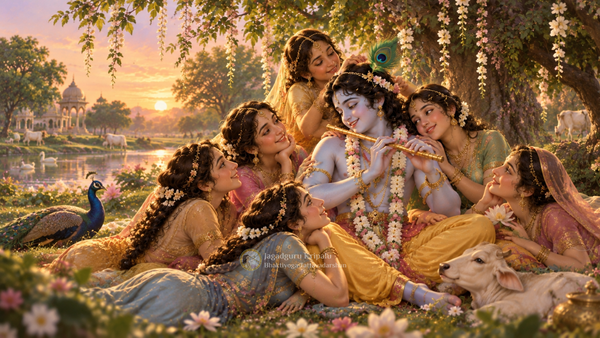
But this law doesn't apply to the Gopis. Their case is different. The Gopis' love was so great and full of sacrifice that for them, God had to say:
na pārayeShaṃ niravadyasaṃyujāṃ svasādhukṛtyaṃ vibudhāSSyuṣāpi vaḥ। yā mābhajan durjaragehaśṛṅkhalāṃ saṃvṛścya tad vaḥ pratiyātu sādhunā।
God says that while He can repay His debt to others, He cannot repay His debt to the Gopis even in the lifetime of the gods. That is why Brahma, Shankar, and all other great beings beg for the dust of the Gopis' feet. Such is the elevated position of the Gopis.
yatte sujāta caraṇāmburuhaṃ staneṣu bhītāḥ śanaiḥ priya dadhīmahi karkaśeṣu।
tenāṭavīmaṭasi tad vyathate na kiṃsvid kūrpādibhirbhramati dhīrbhavadāyuṣāṃ naḥ।
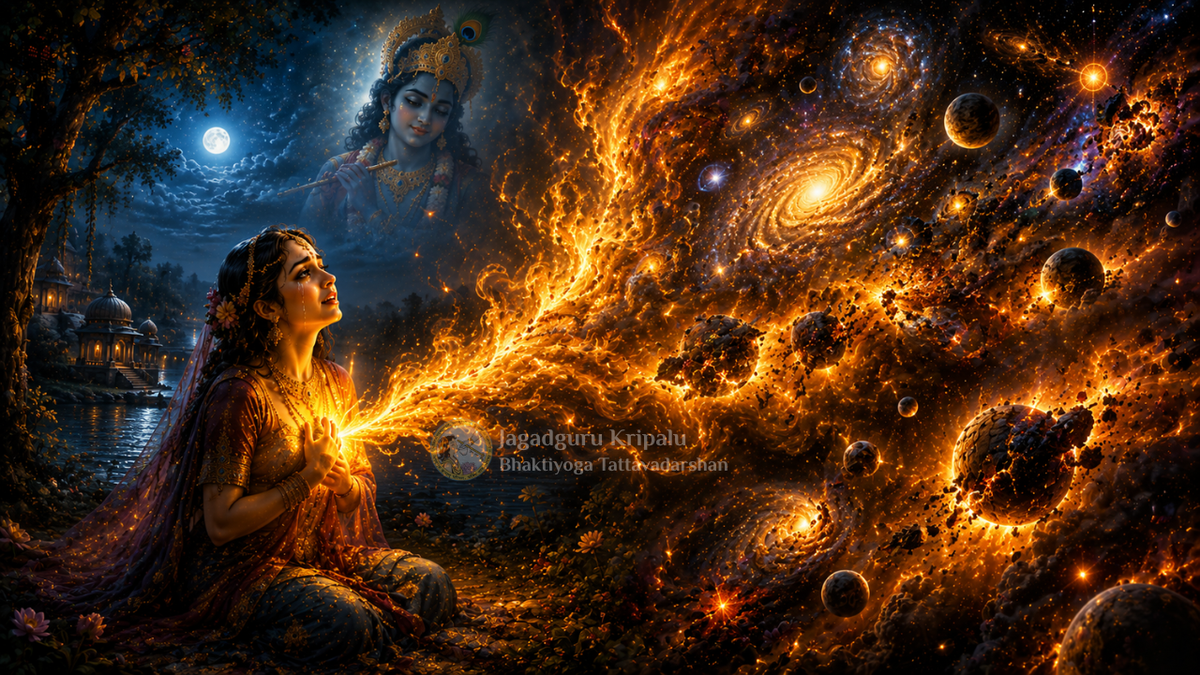
The Gopis say - when I start burning in Your separation, a fire ignites - such burning has never occurred in worldly love (not even Laila-Majnu). That fire of the Gopis is such that if even the smoke from the fire of their separation were to be released, it would reduce infinite universes to ashes. That fire of separation contains the temperature of infinite suns.
Why is it so? What is so special about the fire of separation?
In this world of self-interest, note this carefully - the amount of happiness one gets from meeting someone is proportional to the grief experienced in their separation. When a husband dies, the wife experiences the most grief, followed by the children, who experience less; then friends, who experience even less; and the servant, who experiences the least. This is because, upon meeting him, the wife experienced the greatest happiness, while the others experienced progressively less.
Similarly, the happiness the Gopis experience upon meeting Shyamsundar is not experienced even by great saints (like Tulsidas, Surdas, Mira, etc.). Even Rukmini and others do not experience the same level of happiness that these selfless Gopis of mādhurya bhava experience just by seeing Krishna. They desire only to see Him, not even an embrace. They feel that embracing Him might cause Him discomfort. Just by seeing Him, every pore of their being is filled with divine nectar, and that is why they are called Gopis of Sakhi bhāv. The Gopis who desire to be embraced are called Gopis of kānt bhāv. Since the selfless Gopis of Sakhi bhāv experience such intense happiness upon seeing Shyamsundar, their temperature of separation is equally intense.
Once, a great gyani said to a Gopi, "I have heard much praise of the love you people have. Tell me, too, what kind of love is it?" The gopī merely exhaled a breath, and by that single puff, a green tree was burned to ashes. The enlightened scholar exclaimed in astonishment, "Ah! You possess such an intense love!"
Therefore, God remains eternally indebted to the Gopis. This is the unique nature of Gopi Prem.
Recommended books by Jagadguru Shri Kripalu Ji Maharaj related to this topic: